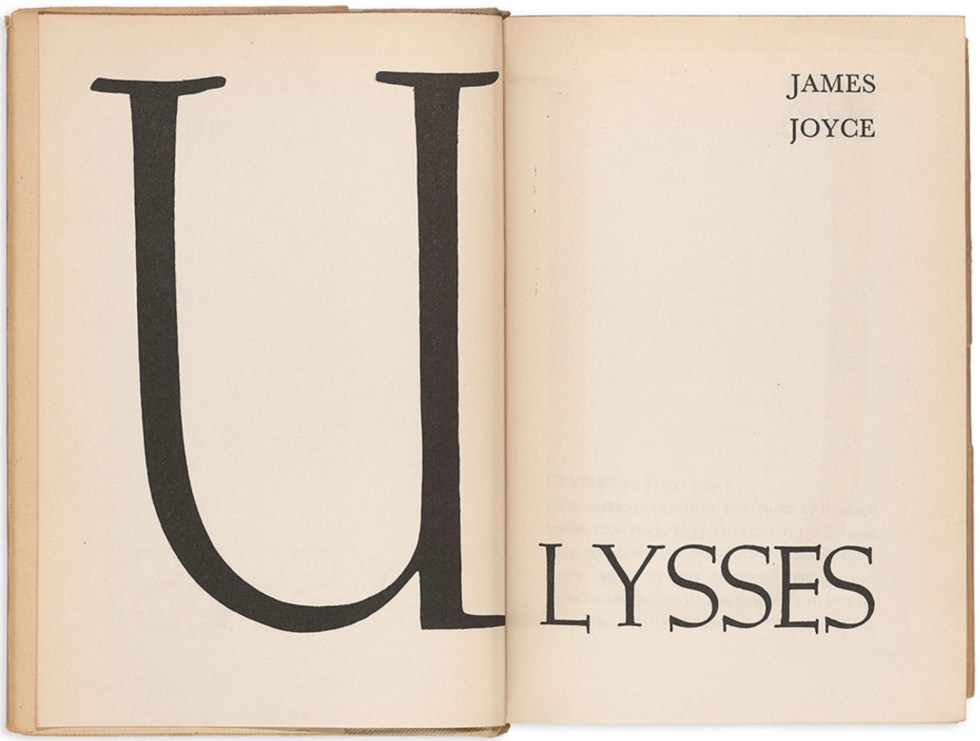
This Friday, June 16, I’ll celebrate Bloomsday, the fictional day in Dublin that unfolds throughout James Joyce’s famous novel, Ulysses.
I’ve written about Bloomsday before (see last year’s post, Breakfast on Bloomsday). Joyce’s Ulysses is one of the great novels in the English language. Right up there with Shakespeare. It’s a challenge to read but loved worldwide for its colour, language, humour, poetry and grim beauty.
Much as I love the novel and look forward every year to raising a glass of Guinness to Mr. Joyce on Bloomsday, the fact is: almost no one knows of the novel. Or some know and have tried to read it but never finished. And some just never bothered!
I was fortunate to study it at university. Once it clicked, I was hooked and re-read it every few years. There are always new layers to discover. It’s timeless.
I was a teenage English Major

That’s because I’m an English Major. Or was one at university.
And almost no one is an English Major anymore, according to a March 2023 article in the New Yorker, “The End of the English Major”.
At one US university, English majors fell from 953 in 2012 to 578 in 2019, just before the pandemic. An alarming drop in such a short time, especially considering the university is one of the leading liberal arts colleges in the country (Arizona State University).
In 2018, another university considered eliminating 13 Majors programs, including English, History and Philosophy. It became economically unfeasible to offer them, given the declining enrollments.
In their place, students have been flocking to STEM programs — a common acronym for science, technology, engineering and mathematics.
Enrolling in university when I started in the 1970s, was a grand delay tactic; a liberal arts idyll, removed from the pressures of the broader world … lying under a tree reading Joseph Conrad, W.B. Yeats and Virginia Woolf. Not to mention Joyce and Ulysses.
A liberal arts idyll
I had no idea about my career, and welcomed the chance to dabble in many topics. It was a chance to put off becoming an adult.
I was so lucky! I remember walking down the Main Mall at UBC, past the Astronomy, Seismology, Agriculture, Biology buildings and feeling thrilled. The world was my oyster! There was so much time!
I gravitated toward the Buchanan complex at UBC, the domain of Arts majors, and the classroom of a gifted instructor who immersed me in the poetry of John Keats, William Shakespeare and Alexandr Solzhenitsyn.
I became an unapologetic English Major; lived in a dream world, though I knew there was peril ahead when I was finished my degree and had to enter the working world for real.
Heady days
Tuition in those days was between $400 and $700 per year. I could earn that and living expenses at a summer job. I faced no debt when I finished in 1978. In my heady days working on the student newspaper, we were incensed that we had to pay tuition.
On another note, a glass of beer cost 65 cents at The Pit, the student pub. When it rose to 75 cents, we were ready to revolt!
If tuition today is $6,000 per year, a four-year degree program will add up quickly (along with books, rent and food, transportation, etc). While a debt of $40,000 may not seem that high, it might be out of reach for students who’ve depended on loans to pay for their degrees.
And how will those loans be repaid when all you’ve got to show is a Bachelor of Arts in English?
English Majors were always a dime-a-dozen — even in those days — and no one expected to quickly turn their BA in English into an executive salary. A few friends with humanities backgrounds pursued careers in academia, philosophy and history. But most ended up driving cabs for a few years, or working in finance or business.
A long way home
It took me a long time to find my way. I landed a few writing jobs, freelancing and writing for newspapers and magazines. When the news industry faltered in the 1980s, I went “to the dark side” and worked in public relations. My last job before “retiring” was teaching English as a second language.
The New Yorker article is long and fascinating. Still, it doesn’t convey the satisfaction I feel (and many others) in having been touched by great literature through study and careful reading. The enduring admiration for the ability of language to convey the spectrum emotion, insight, humour, tragedy. The light-filled world and its unsavoury, violent underpinnings.
The inventiveness and courage of a writer like James Joyce who spent seven years writing Ulysses, taking us inside one day (June 16, 1904) in Dublin, inside his exquisite, simple characters and making their lives mythic, like the classical heroes of Greek mythology, like Ulysses himself.
O Molly, O the sea!
The novel ends with an ecstatic soliloquy by the character Molly Bloom, the wife of our main character, Leopold Bloom. It’s a stream of consciousness, a life-affirming reverie of the life force that flows through us all in high moments:
O and the sea the sea crimson sometimes like fire and the glorious sunsets and the figtrees in the Alameda gardens yes and all the queer little streets and the pink and blue and yellow houses and the rosegardens and the jessamine geraniums and cactuses and Gibraltar as a girl where I was a Flower of the mountain yes when I put the rose in my hair like the Andalusian girls used or shall I wear a red yes and how he kissed me under the Moorish wall and I thought well as well him as another and then I asked him with my eyes to ask again yes and then he asked me would I yes to say yes my mountain flower and first I put my arms around him yes and drew him down to me so he could feel my breasts all perfume yes and his heart was going like mad and yes I said yes I will Yes.
Final lines from Ulysses by James Joyce
Happy Bloomsday!

A new outlook for the Happy Monk Baking Company, a shift of focus from oven-to-home bread delivery to the community of the Pender Island Farmers Market [ See Link in Profile ]
Jan 29

![A new outlook for the Happy Monk Baking Company, a shift of focus from oven-to-home bread delivery to the community of the Pender Island Farmers Market [ See Link in Profile ]](https://i0.wp.com/happymonkbaking.com/wp-content/plugins/instagram-feed-pro/img/placeholder.png?w=980&ssl=1)
A bread-fail last week produced great-tasting Sesame-Miso Frisbees or Umami Chapeaus! What to do with the remnants? Hard-bread, rusks, croutons, or what have you. And the Ravens get their fair share, too … O come to me Huginn and Munnin! Fill your beaks and carry my greetings and blessings to Odin! [ See link in my LinkTree in HappyMonk Profile ]
.
.
.
.
#showusyourfuckedloaves, #sesamemiso, #sesamemiso, #sesamemisobread, #hardtack, #hardbread, #croutons, #huginnandmunnin, #odin, #penderisland, #southpenderisland, #happymonkbaking, #southerngulfislands|
Jul 21

Latest Happy Monk Blog: The World is Too Much With Us - In our little Island paradise, how to embrace all the beauty when the world is going to hell in a hand basket? ALSO: Baker`s Choice - Brown-Rice Miso and Sesame Sourdough [ See LinkTree in Profile ]
Jul 17

Latest Happy Monk Blog: "A Bird Came Down the Walk," a brief flirtation with ChatGPT that was awkward but offered an exquisite poem by Emily Dickinson. [See LinkTree in Profile ]
Jul 3

Resurrected a couple of Salish Sourdough loaves forgotten inside Mildrith, the wood-fired oven. They emerged charred and hell-fired, sadly, so I took a knife to them and made them almost new again!
.
.
.
.
#woodfired #woodfiredoven #coboven #Mildrith #Mildriththeoven #woodfiredovenbread #sourdough #sourdoughbread #penderisland #southpenderislands #happymonkbaking #burntbread #showusyourfuckedloaves
Jun 9

Strongly recommend installing the Smell-O-Vision™ feature on your device to appreciate the aroma of these Rye-Currant Sourdough loaves, just out of the oven. Wish I could capture it in a jar, or make a scratch ‘n’ sniff postage stamp (like the recent French stamp commemorating the baguette). And this loaf tastes just as lovely as they look!
Jun 1

The Happy Monk Baking Company
Happy Monk Tidings - May 15, 2024 🍞 - BLOG REDUX: "Saving Grace"; BAKER`S CHOICE: Sprouted Purple Barley Sourdough; REGULAR: Seed Feast.
May 15

It’s late at night and chances are there’s a baker near you having fun with bread dough …
.
.
.
.
#bakers #bakerslife #bakersofinstagram #bakerslifeforme #nighttime #nightlife #nightsky #bakingmagic
May 5

All spelt, all the time … well, with a few glugs of maple syrup
..
.
.
.
.
.
#spelt #wholegrain #tinloaves #realbread #breadbakers #breadbakersofinstagram
#artisanbreadbakers #speltbread #speltsourdoughbread #speltbread #wholegrainspeltbread #penderisland #southpenderisland #happymonkbaking #happymonkbaker
Apr 20

New Happy Monk Blog: Spring brings mixed blessings! A sense of loss, along with warmth and a new cast of light, "That Science cannot overtake / But Human Nature Feels." Westeros and Emily Dickinson`s sensitive heart. [ See LinkTree in Profile ]
Apr 3

This little guy is a workhorse, plain and simple. A brute! Thursday, it milled over 27kg of incredible flour for a recipe that needed the freshest flour possible. And its output was beautiful. Wheat, spelt, rye and buckwheat. A larger mill could have handled that in a fraction of the time, but who’s complaining? Some amazing bread was the result, milled and mixed the same day. A Country Miche from an article by Eric Pallant @epallant in the Winter/Spring 2023 issue of Bread Lines.
.
.
.
.
.
#spelt #speltbread #buckwheat #buckwheatbread #bread #realbread #naturallyleavened #baker #bakery #bbga #artisanbread #breadhead #naturallyleavened #artisanbread #realbread #rusticbread #flourmilling #flourmill #komoflourmills #sourdough #sourdoughbread #penderisland #southpenderislands
Mar 2

Latest Happy Monk Blog - The Living Rock Island – Our Little Corner of South Pender Island 🍞 [See LinkTree in Profile]
Feb 28

O, for a slice of raisin sourdough! that hath been
Warm’d a long age in the deep delvéd oven,
Tasting of Hestia and the ocean green,
Rest and a slow moving song and sunburnt mirth!
O for a loaf full of the warm South
Full of the true, the blushful Hippocrene,
With beaded raisins winking at the crumb,
And cinnamon-stainéd mouth;
That I might eat, and leave the world unseen,
And with thee fade away into the forest dim.
— Apologies to John Keats for my butchery of his “Ode to a Nightingale”
Feb 25

At the outset of the Happy Monk Baking Company, I cherished those early mornings, working alone with Mildrith in the dark before the birds began their glorious morning chorus. The world was silent, unhurried. Mildrith and me, the trees, the solid earth, a passing deer, the baskets of bread dough waiting for the oven.
Going to work in the pre-dawn hours was something bakers did, I thought. They sacrificed sleep and delivered their bread early to appreciative customers. It was a romantic notion on my part, a naïve commitment to the baking trade without fully understanding the consequences, i.e. sleep debt.
It was satisfying to have loaves ready for some customers before noon; it was a triumph! But by the time most of the bread was ready for delivery, bagged and labelled, my eyelids were growing heavy, my mind fuzzy, my body slowing down.
And it wasn’t safe driving up-island.
.
.
.
.
#bakerslife #bakers #sleepdeprivation #woodfired #woodfiredoven #woodfiredovenbread #bread #realbread #naturallyleavened #baker #bakery #bbga #artisanbread #breadhead #sourdough #sourdoughbread #penderisland #southpenderislands #happymonkbaking #happymonkbakery #happymonkbakingcompany
Feb 1

Milling a little corn to mix in with some marinated olives before they go into a tapenade infused dough. Big olive flavour … plus a rare shot of Mildrith, the wood-fired oven!
Nov 19

Happy Monk Tidings - November 15, 2023 BAKER`S CHOICE this week: Olive Sourdough Loaf; AND: An Emotional Weather Report [ See LinkTree in Profile ] 🍞
Nov 15

Happy Monk Tidings - November 1, 2023 🍞 - BAKER`S CHOICE: Sourdough Sandwich Loaf; BLOG: Don`t Let That Wonder Lawyer Tell You It`s Not Real Bread! [ See LinkTree in Profile ]
Nov 1

Dylan Thomas, one of my muses, would have been 109 years old this Friday, Oct. 27. One of a small-handful of poets whose words are cherished and summoned often for their music and wisdom. They soothe, they sing, they evoke. I`ll be thinking of him this bread day, under "the mustardseed sun"….. and the "switchback sea"…. as he "celebrates and spurns his driftwood thirty fifth wind turned age."
.
.
.
.
#dylanthomas #poetsofinstagram #poetrylovers #poetryisnotdead #poetryofinstagram #poets #poetryislife #poetrylove #poetrydaily #poetryworld #poetryinstagram #bakerpoets #poetryforbakers #southpenderisland #penderisland
Happy Monk Tidings - October 25, 2023 🍞 - BAKER`S CHOICE - Sprouted Emmer Sourdough; BLOG: Happy Birthday, Dylan Thomas! [See LinkTree in Profile ]
Oct 25

Happy Monk Tidings - October 18, 2023 - 🍞: BAKER`s CHOICE: Seedy Spelt and Rye Bread; BLOG: It Starts With Wonder? What`s That?
Oct 18

Happy Monk Tidings - October 11, 2023 BAKER`S CHOICE: Potato Rosemary Bread; BLOG: Swimming with Otters 🍞
Oct 11

Happy Monk Tidings - BLOG: Abundance: Season of Apples; Baker`s Choice: Pender Island Apple Bread with Pender Apples and Twin Island Cider - October 4, 2023 🍞 [ See LinkTree in Profile ]
Oct 4

Happy Monk Tidings - September 27, 2023 🍞 - BAKER`S CHOICE THIS WEEK: Harvest Bread; BLOG: Positively Fourth Avenue - [ See LinkTree in Profile ]
Sep 27

Happy Monk Tidings - September 20, 2023 🍞 - BAKER`S CHOICE: Garlic Levain Bread; BLOG: Harumph! Author Says Leave the Baking to the Professionals! [ See LinkTree in Profile ]
Sep 20

A hefty Country Miche, formula from Breadlines published by Bread Bakers Guild of America. Hefty in size, hefty in flavour. Four flours (Sifted Metchosin Wheat, Rye, Buckwheat, Spelt), a super-active levain and an intense crust colour. I think I’m addicted! It’s kind of finicky, though, and trying to work out a reasonable schedule to produce 40 loaves for Happy Monk customers.
.
.
.
.
. #bread #realbread #naturallyleavened #baker #bakery #bbga #artisanbread #breadhead #sourdough #sourdoughbread #penderisland #southpenderislands #happymonkbaking #happymonkbakingcompany #wholegrainbread #breadhead #michebread #realbread #rusticbread #southerngulfislands #southerngulfislandsbakers #southerngulfislandsbakeries
Sep 14
