
A few months back, Jen and I went to a dinner party, one of the first in a long time, post-COVID. The food and conversation were lovely, but one person in the group launched into a diatribe against George Harrison, the deceased lead guitarist of the Fab Four.
The Beatles, in my mind, are unassailable. They left a remarkable legacy of music and creative innovation for the 20th century. And each member of the group contributed something unique to the Beatles’ alchemy. The group would not have been the same force without any one of them.
Sullied by plagiarism
Our friend’s criticism was withering. All of Harrison’s contributions, he said, were sullied by the fact that he was found guilty in a lawsuit that accused him of plagiarizing. Parts of Harrison’s song “My Sweet Lord,” a judge found, had been copied from an earlier song, “He’s So Fine,” written and performed in 1963 by the American “girl group,” The Chiffons.
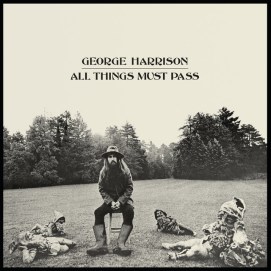
“He was a terrible guitarist, too,” our friend railed, piling on his contempt. His evidence seemed to be George’s inability to read music and not knowing which key a song was. We’d been talking about Get Back, the recent Beatles documentary about one of the group’s last recording sessions. 1
In the movie, George was clearly struggling to keep up with the torrent of musical ideas issuing from Lennon and McCartney. George was only trying to do the bidding of Paul, who had a clear picture of what he wanted in the song on which they were working. And he was being a bit of a tyrant trying to get the others to go along with him.
Deserving of contempt?
Many at our dinner table were taken aback by our friend’s rant. A few of us raised eyebrows at each other in disbelief. What did George do to deserve this contempt?
Harrison’s 1971 plagiarism suit was a humiliation, yet he was nothing but generous throughout the court case. He agreed it sounded like The Chiffons hit but maintained his innocence because he was unconscious of the similarities at the time.
“When I wrote the song, it was more improvised and not fixed,” he wrote in his autobiography, I, Me, Mine.
“Why didn’t I realize? It would have been very easy to change a note here or there and not affect the feeling of the record.”
Simmering legal battles
After two years in court, he offered to pay the publisher 40 percent of the royalties for “My Sweet Lord.”
But Harrison had to battle in the courts for another eight years after the vindictive ex-Beatles manager, Alan Klein, got involved demanding Harrison pay more money. In 1981, he paid $587,000 to purchase the rights to “He’s So Fine.” Now Harrison owned the damn song! He cancelled the suit.
The idea that George set out to steal the song doesn’t fit with his character, or at least what we know of it. His admission that he was unconscious of the similarities had the ring of truth. His explanation of how he wrote the song sounded plausible. Let’s give him the benefit of doubt!
Sadly, George died of lung cancer in 2001, leaving behind a round-up of sublime hits like “Something”, “Here Comes the Sun” and “While My Guitar Gently Weeps.”
Dylan’s Nobel acceptance speech
I recently listened to (and later read a transcript) of Bob Dylan’s Nobel Prize for Literature acceptance speech in 2016. It throws light on Harrison’s contention that artistic expression can be unconscious and mysterious.
Dylan is no stranger to charges of plagiarism. You can find quite a few examples online, including the claim that he lifted parts of the Nobel acceptance speech directly from a SparkNotes study aid.
In a 2012 interview with Rolling Stone magazine, Dylan responded to some of these accusations: “I’m working within my art form,” he said. “It’s that simple. I work within the rules and limitations of it. There are authoritarian figures that can explain that kind of art form better to you than I can. It’s called songwriting. It has to do with melody and rhythm, and then after that, anything goes. You make everything yours. We all do it.”
Make everything yours
Because Dylan didn’t attend the official Nobel ceremony, he was required to submit a formal acceptance in order to receive the $900,000 award for the Prize. He provided an audio recording of a speech discussing the meaning the Nobel Award held for him. 3. It’s a moving description of the role great works of literature played in his life and how these works informed his artistic vision. You can listen to it here, or read a transcript here.
Dylan makes a strong case for artistic license in the speech. He describes his formative period as an artist in the early part of his career.
By listening to all the early folk artists and singing the songs yourself, you pick up the vernacular. You internalize it, sing it in the ragtime blues, work songs, Georgia sea shanties, Appalachian ballads and cowboy songs. You hear all the finer points, and you learn the details …
I had all the vernacular down. I knew the rhetoric. None of it went over my head – the devices, the techniques, the secrets, the mysteries – and I knew all the deserted roads that it travelled on, too. I could make it all connect and move with the current of the day. When I started writing my own songs, the folk lingo was the only vocabulary that I knew, and I used it.
Striking a chord
Inspiration comes from any number of places. Things can strike a chord in you. The original creator of the work may not have imagined that.
Quotation, which touches the fuzzy line with plagiarism, is a rich and enriching tradition. People have been doing it for centuries. You borrow an idea or a line and make it yours.

The Dylan song, “Tin Angel” from one of my favourite albums, Tempest, clearly borrows from Shakespeare’s Tragedy of Romeo and Juliet:
She touched his lips and kissed his cheek
Bob Dylan, “Tin Angel”
He tried to speak, but his breath was weak
“You died for me; now I’ll die for you.”
She put the blade to her heart, and she ran it through.
You can trace this imagery through literature, art, song, and dance. “Romeo and Juliet” appears to have been lifted from the 15th-century Italian poet Masuccio Salernitano. It goes between Dylan and Shakespeare, but even Shakespeare borrowed those before him.
“Nothing new under the sun”
Shakespeare’s historical plays, most of the tragedies, and even the comedies were all borrowed from predecessors and turned into plays unmistakably his own.
In the Nobel speech, Dylan draws out three examples of western literature that were incredibly influential to him as a youth: Herman Melville’s Moby Dick, All Quiet on the Western Front by the German writer Erich Maria Remarque Homer’s The Odyssey.
Reading Dylan’s summaries of these novels is like an overview of his canon: the epic stories, the titanic struggles, the colourful characters, the moral dilemmas. Some characters are obscure; some are blazingly real. Like these lines from the song “Desolation Row”:
Einstein disguised as Robin Hood
Bob Dylan, “Desolation Row”
With his memories in a trunk
Passed this way an hour ago
With his friend, a jealous monk
He looked so immaculately frightful
As he bummed a cigarette
Then he went off sniffing drainpipes
And reciting the alphabet
Now you would not think to look at him
But he was famous long ago
For playing the electric violin on Desolation Row
Dylan’s never going to be sued for lines like these, unlike Harrison, but it illustrates how ideas can be lifted from one context and used in a different, original way.
A few musical notes
What got Harrison in trouble was a few musical notes in “My Sweet Lord.” They were too similar to those in a song by The Chiffons.
Harrison wrote about the “My Sweet Lord” lawsuit in ‘This Song ‘from the album Thirty-Three and a Third. It’s a clever depiction of the absurdities he faced over the years in court.
He didn’t have the stomach for legal wranglings of the trial, he wrote elsewhere, believing that most popular music was reminiscent of something which had come before.
Harrison’s former bandmate John Lennon may have put it more succinctly.
“Music is everybody’s business,” Lennon claimed. “It’s only the publishers who think people own it.”

A new outlook for the Happy Monk Baking Company, a shift of focus from oven-to-home bread delivery to the community of the Pender Island Farmers Market [ See Link in Profile ]
Jan 29

![A new outlook for the Happy Monk Baking Company, a shift of focus from oven-to-home bread delivery to the community of the Pender Island Farmers Market [ See Link in Profile ]](https://i0.wp.com/happymonkbaking.com/wp-content/plugins/instagram-feed-pro/img/placeholder.png?w=980&ssl=1)
A bread-fail last week produced great-tasting Sesame-Miso Frisbees or Umami Chapeaus! What to do with the remnants? Hard-bread, rusks, croutons, or what have you. And the Ravens get their fair share, too … O come to me Huginn and Munnin! Fill your beaks and carry my greetings and blessings to Odin! [ See link in my LinkTree in HappyMonk Profile ]
.
.
.
.
#showusyourfuckedloaves, #sesamemiso, #sesamemiso, #sesamemisobread, #hardtack, #hardbread, #croutons, #huginnandmunnin, #odin, #penderisland, #southpenderisland, #happymonkbaking, #southerngulfislands|
Jul 21

Latest Happy Monk Blog: The World is Too Much With Us - In our little Island paradise, how to embrace all the beauty when the world is going to hell in a hand basket? ALSO: Baker`s Choice - Brown-Rice Miso and Sesame Sourdough [ See LinkTree in Profile ]
Jul 17

Latest Happy Monk Blog: "A Bird Came Down the Walk," a brief flirtation with ChatGPT that was awkward but offered an exquisite poem by Emily Dickinson. [See LinkTree in Profile ]
Jul 3

Resurrected a couple of Salish Sourdough loaves forgotten inside Mildrith, the wood-fired oven. They emerged charred and hell-fired, sadly, so I took a knife to them and made them almost new again!
.
.
.
.
#woodfired #woodfiredoven #coboven #Mildrith #Mildriththeoven #woodfiredovenbread #sourdough #sourdoughbread #penderisland #southpenderislands #happymonkbaking #burntbread #showusyourfuckedloaves
Jun 9

Strongly recommend installing the Smell-O-Vision™ feature on your device to appreciate the aroma of these Rye-Currant Sourdough loaves, just out of the oven. Wish I could capture it in a jar, or make a scratch ‘n’ sniff postage stamp (like the recent French stamp commemorating the baguette). And this loaf tastes just as lovely as they look!
Jun 1

The Happy Monk Baking Company
Happy Monk Tidings - May 15, 2024 🍞 - BLOG REDUX: "Saving Grace"; BAKER`S CHOICE: Sprouted Purple Barley Sourdough; REGULAR: Seed Feast.
May 15

It’s late at night and chances are there’s a baker near you having fun with bread dough …
.
.
.
.
#bakers #bakerslife #bakersofinstagram #bakerslifeforme #nighttime #nightlife #nightsky #bakingmagic
May 5

All spelt, all the time … well, with a few glugs of maple syrup
..
.
.
.
.
.
#spelt #wholegrain #tinloaves #realbread #breadbakers #breadbakersofinstagram
#artisanbreadbakers #speltbread #speltsourdoughbread #speltbread #wholegrainspeltbread #penderisland #southpenderisland #happymonkbaking #happymonkbaker
Apr 20

New Happy Monk Blog: Spring brings mixed blessings! A sense of loss, along with warmth and a new cast of light, "That Science cannot overtake / But Human Nature Feels." Westeros and Emily Dickinson`s sensitive heart. [ See LinkTree in Profile ]
Apr 3

This little guy is a workhorse, plain and simple. A brute! Thursday, it milled over 27kg of incredible flour for a recipe that needed the freshest flour possible. And its output was beautiful. Wheat, spelt, rye and buckwheat. A larger mill could have handled that in a fraction of the time, but who’s complaining? Some amazing bread was the result, milled and mixed the same day. A Country Miche from an article by Eric Pallant @epallant in the Winter/Spring 2023 issue of Bread Lines.
.
.
.
.
.
#spelt #speltbread #buckwheat #buckwheatbread #bread #realbread #naturallyleavened #baker #bakery #bbga #artisanbread #breadhead #naturallyleavened #artisanbread #realbread #rusticbread #flourmilling #flourmill #komoflourmills #sourdough #sourdoughbread #penderisland #southpenderislands
Mar 2

Latest Happy Monk Blog - The Living Rock Island – Our Little Corner of South Pender Island 🍞 [See LinkTree in Profile]
Feb 28

O, for a slice of raisin sourdough! that hath been
Warm’d a long age in the deep delvéd oven,
Tasting of Hestia and the ocean green,
Rest and a slow moving song and sunburnt mirth!
O for a loaf full of the warm South
Full of the true, the blushful Hippocrene,
With beaded raisins winking at the crumb,
And cinnamon-stainéd mouth;
That I might eat, and leave the world unseen,
And with thee fade away into the forest dim.
— Apologies to John Keats for my butchery of his “Ode to a Nightingale”
Feb 25

At the outset of the Happy Monk Baking Company, I cherished those early mornings, working alone with Mildrith in the dark before the birds began their glorious morning chorus. The world was silent, unhurried. Mildrith and me, the trees, the solid earth, a passing deer, the baskets of bread dough waiting for the oven.
Going to work in the pre-dawn hours was something bakers did, I thought. They sacrificed sleep and delivered their bread early to appreciative customers. It was a romantic notion on my part, a naïve commitment to the baking trade without fully understanding the consequences, i.e. sleep debt.
It was satisfying to have loaves ready for some customers before noon; it was a triumph! But by the time most of the bread was ready for delivery, bagged and labelled, my eyelids were growing heavy, my mind fuzzy, my body slowing down.
And it wasn’t safe driving up-island.
.
.
.
.
#bakerslife #bakers #sleepdeprivation #woodfired #woodfiredoven #woodfiredovenbread #bread #realbread #naturallyleavened #baker #bakery #bbga #artisanbread #breadhead #sourdough #sourdoughbread #penderisland #southpenderislands #happymonkbaking #happymonkbakery #happymonkbakingcompany
Feb 1

Milling a little corn to mix in with some marinated olives before they go into a tapenade infused dough. Big olive flavour … plus a rare shot of Mildrith, the wood-fired oven!
Nov 19

Happy Monk Tidings - November 15, 2023 BAKER`S CHOICE this week: Olive Sourdough Loaf; AND: An Emotional Weather Report [ See LinkTree in Profile ] 🍞
Nov 15

Happy Monk Tidings - November 1, 2023 🍞 - BAKER`S CHOICE: Sourdough Sandwich Loaf; BLOG: Don`t Let That Wonder Lawyer Tell You It`s Not Real Bread! [ See LinkTree in Profile ]
Nov 1

Dylan Thomas, one of my muses, would have been 109 years old this Friday, Oct. 27. One of a small-handful of poets whose words are cherished and summoned often for their music and wisdom. They soothe, they sing, they evoke. I`ll be thinking of him this bread day, under "the mustardseed sun"….. and the "switchback sea"…. as he "celebrates and spurns his driftwood thirty fifth wind turned age."
.
.
.
.
#dylanthomas #poetsofinstagram #poetrylovers #poetryisnotdead #poetryofinstagram #poets #poetryislife #poetrylove #poetrydaily #poetryworld #poetryinstagram #bakerpoets #poetryforbakers #southpenderisland #penderisland
Happy Monk Tidings - October 25, 2023 🍞 - BAKER`S CHOICE - Sprouted Emmer Sourdough; BLOG: Happy Birthday, Dylan Thomas! [See LinkTree in Profile ]
Oct 25

Happy Monk Tidings - October 18, 2023 - 🍞: BAKER`s CHOICE: Seedy Spelt and Rye Bread; BLOG: It Starts With Wonder? What`s That?
Oct 18

Happy Monk Tidings - October 11, 2023 BAKER`S CHOICE: Potato Rosemary Bread; BLOG: Swimming with Otters 🍞
Oct 11

Happy Monk Tidings - BLOG: Abundance: Season of Apples; Baker`s Choice: Pender Island Apple Bread with Pender Apples and Twin Island Cider - October 4, 2023 🍞 [ See LinkTree in Profile ]
Oct 4

Happy Monk Tidings - September 27, 2023 🍞 - BAKER`S CHOICE THIS WEEK: Harvest Bread; BLOG: Positively Fourth Avenue - [ See LinkTree in Profile ]
Sep 27

Happy Monk Tidings - September 20, 2023 🍞 - BAKER`S CHOICE: Garlic Levain Bread; BLOG: Harumph! Author Says Leave the Baking to the Professionals! [ See LinkTree in Profile ]
Sep 20

A hefty Country Miche, formula from Breadlines published by Bread Bakers Guild of America. Hefty in size, hefty in flavour. Four flours (Sifted Metchosin Wheat, Rye, Buckwheat, Spelt), a super-active levain and an intense crust colour. I think I’m addicted! It’s kind of finicky, though, and trying to work out a reasonable schedule to produce 40 loaves for Happy Monk customers.
.
.
.
.
. #bread #realbread #naturallyleavened #baker #bakery #bbga #artisanbread #breadhead #sourdough #sourdoughbread #penderisland #southpenderislands #happymonkbaking #happymonkbakingcompany #wholegrainbread #breadhead #michebread #realbread #rusticbread #southerngulfislands #southerngulfislandsbakers #southerngulfislandsbakeries
Sep 14

See my earlier blog post about this remarkable documentary about the Beatles’ last days in the studio, which came out last November.↩
Bob Dylan did not attend the official Nobel award ceremony. Instead, he asked the rock singer, Patti Smith, to attend. Smith obliged, offering to sing one of Dylan’s most vivid songs, “A Rain’s A-Gonna Fall.” Her performance is breathtaking! Early on, choked with emotion and nerves, she stumbles. She forgets the words! Her presence and humility, and the silent support of the audience, allow her to recover and finish the song. But the performance on its own would have been sublime, even without the “gaffe.” The orchestration and vocal performance are incredibly stirring. I can’t watch it without sobbing!
Dylan joined a rarified atmosphere of literary genius, including Ernest Hemingway, Doris Lessing, Seamus Heany, Toni Morrison and many others↩
Interesting. George Harrison was the most under-rated Beatle. While my guitar gently weeps is one of the all time greatest songs in my mind and in million’s of opinions. I would have liked to have been in on that conversation! I couldn’t agree with you more.
Good article David!